Wednesday, 31 July 2013

Doctor Who: The Complete Seventh Series – changed DVD/Blu-ray cover and info

BBC Worldwide have announced additions to the content of the Doctor Who: The Complete Seventh Series DVD and Blu-ray box set in the UK, the most significant of which is the previously absent 2011 Christmas Special:

BBC Worldwide releases all thirteen blockbuster episodes from Doctor Who Series Seven and the 2011 and 2012 Christmas Specials on Blu-ray and DVD on 28 October 2013. In addition, the set contains exciting bonus features including behind-the-scenes featurettes, Doctor Who at Comic Con, specials The Companions and Doctor Who in the US, and more. These latest adventures test the Eleventh Doctor (Matt Smith) and prove that even a madman with a box needs help sometimes.

Say farewell to the Ponds all over again. Meet the enigmatic Clara for the first time – and the second, and the third. Face enemies new and old, follow the Doctor to the one place he should never go, and learn the secret to a really great soufflĂ©. With a cliffhanger ending that will leave fans breathless, this set arrives just in time to catch up before the Doctor Who 50th Anniversary Special on 23 November, and the Doctor’s regeneration in this year’s Christmas Special.

In The Doctor, the Widow and the Wardrobe, the 2011 Christmas Special, the Doctor proves that sometimes wishes really do come true when his mysterious gift leads Madge Arwell and her two children to a magical wintry wonderland. Then, in the first part of Series Seven, the Ponds (Karen Gillan and Arthur Darvill) make their final voyages with the Doctor. They save a spaceship full of dinosaurs, don Stetsons in the Wild West and are even kidnapped by the Doctor's oldest foe. But when they arrive in Manhattan the Weeping Angels are waiting for them – and the Doctor has to say goodbye to his companions forever.

The 2012 Christmas Special, The Snowmen, brings the Doctor a new friend (Jenna Coleman) in Victorian London – but has he already met her before? And will she be able to pull him from his mourning in time to save London from the chilling menace that threatens it? The final eight episodes of Series Seven see the Doctor and his new companion battle monsters on distant alien planets, become trapped in a Russian submarine with a deadly passenger, chase terrifying ghosts, and come face-to-face with an army of upgraded Cybermen. When his friends are kidnapped, the Doctor and Clara are forced to visit the fields of Trenzalore, where the question that must never be answered is finally asked… and the Doctor uncovers the secret of the Impossible Girl.

The incredible list of guest stars includes John Hurt (Tinker, Tailor, Soldier, Spy), Warwick Davis (Willow, the Harry Potter films), Liam Cunningham (Game of Thrones), David Warner (Titanic, TRON), Dougray Scott (Hemlock Grove, Ever After: A Cinderella Story), Ben Browder (Farscape), David Bradley (Game of Thrones), Jessica Raine (Call the Midwife, The Woman in Black), the mother-daughter duo of Dame Diana Rigg (Game of Thrones) and Rachael Stirling (Women in Love, Snow White and the Huntsman), and the voice of Sir Ian McKellen (The Lord of the Rings films). The episodes are written by lead writer and executive producer Steven Moffat, as well as Neil Gaiman, Mark Gatiss, Neil Cross, Chris Chibnall, Toby Whithouse and Stephen Thompson.

Additional content includes:

Behind the scenes featurettes for every episode (except The Doctor, the Widow and the Wardrobe)

Additional featurettes include: The Making of the Gunslinger, Creating Clara, Rain Gods, Clara and the TARDIS, Inforarium and Clara’s White Christmas

Other featurettes including: Olympics: Good as Gold (UK only), Last Days of the Ponds, Pond Life, The Science of Doctor Who, The Companions and Doctor Who at Comic Con

Prequels to episodes: The Doctor, the Widow and the Wardrobe, Asylum of the Daleks, The Snowmen (The Great Detective, Vastra Investigates and Demons Run: Two Days Later), The Bells of Saint John and The Name of the Doctor (She Said, He Said and Clarence and the Whispermen)

Audio commentaries for episodes: The Snowmen, Cold War, Hide and The Crimson Horror

The official BBC Worldwide statement on the additions to the box set is as follows:

Originally the decision was taken not to include The Doctor, the Widow and the Wardrobe on the box set as it had previously been released as a standalone product. However after listening to feedback from our fans we have decided to include the episode and its prequel on the set. The price of the set will not change as a result of the change of contents.

The Complete Seventh Series will be released on 28 October 2013 in the UK, with an RRP of £51.05 (DVD) and £57.18 (Blu-ray).

Thanks to BBC Worldwide

Friday, 26 July 2013

[Updated] Doctor Who: The Complete Seventh Series – Blu-ray/DVD cover and info

IMPORTANT:
This article has now been superseded by a newer press release from BBC Worldwide, making additions to the content of the UK box set.

This morning, BBC Worldwide sent Telly Tech the cover art and details for the forthcoming Doctor Who: The Complete Seventh Series box set, due for release on Blu-ray and DVD in the UK this October.

BBC Worldwide releases all thirteen blockbuster episodes from the seventh series of the iconic sci-fi series Doctor Who on Blu-ray and DVD on 28 October 2013. In addition, the set includes the 2012 Christmas Special, and exciting bonus features including behind-the-scenes featurettes, Doctor Who at Comic Con, specials The Companions and Doctor Who in the US, and more. These latest adventures test the Eleventh Doctor (Matt Smith) and prove that even a madman with a box needs help sometimes.

Say farewell to the Ponds all over again. Meet the enigmatic Clara for the first time – and the second, and the third. Face enemies new and old, follow the Doctor to the one place he should never go, and learn the secret to a really great soufflĂ©. With a cliffhanger ending that will leave fans breathless, this set arrives just in time to catch up before the Doctor Who 50th Anniversary Special on 23 November, and the Doctor’s regeneration in this year’s Christmas Special.

In the first part of Series Seven, the Ponds (Karen Gillan and Arthur Darvill) make their final voyages with the Doctor. They save a spaceship full of dinosaurs, don Stetsons in the Wild West and are even kidnapped by the Doctor's oldest foe. But when they arrive in Manhattan the Weeping Angels are waiting for them – and the Doctor has to say goodbye to his companions forever.

The 2012 Christmas Special, The Snowmen, brings the Doctor a new friend (Jenna Coleman) in Victorian London – but has he already met her before? And will she be able to pull him from his mourning in time to save London from the chilling menace that threatens it? The final eight episodes of Series Seven see the Doctor and his new companion battle monsters on distant alien planets, become trapped in a Russian submarine with a deadly passenger, chase terrifying ghosts, and come face-to-face with an army of upgraded Cybermen. When his friends are kidnapped, the Doctor and Clara are forced to visit the fields of Trenzalore, where the question that must never be answered is finally asked… and the Doctor uncovers the secret of the Impossible Girl.

The incredible list of guest stars includes John Hurt (Tinker, Tailor, Soldier, Spy), Warwick Davis (Willow, the Harry Potter films), Liam Cunningham (Game of Thrones), David Warner (Titanic, TRON), Dougray Scott (Hemlock Grove, Ever After: A Cinderella Story), Ben Browder (Farscape), David Bradley (Game of Thrones), Jessica Raine (Call the Midwife, The Woman in Black), the mother-daughter duo of Dame Diana Rigg (Game of Thrones) and Rachael Stirling (Women in Love, Snow White and the Huntsman), and the voice of Sir Ian McKellen (The Lord of the Rings films). The episodes are written by lead writer and executive producer Steven Moffat, as well as Neil Gaiman, Mark Gatiss, Neil Cross, Chris Chibnall, Toby Whithouse and Stephen Thompson.

Additional content includes:

Behind the scenes featurettes for every episode, plus The Making of the Gunslinger and Creating Clara.

Other featurettes including: Doctor Who in the US, Last Days of the Ponds, Pond Life, The Science of Doctor Who, The Companions and Doctor Who at Comic Con.

Prequels to episodes: Asylum of the Daleks, The Snowmen (x3), The Bells of Saint John and The Name of the Doctor (x2).

Audio commentaries for episodes: The Snowmen, Cold War, Hide and The Crimson Horror.


The Complete Seventh Series will be released on 28 October 2013 in the UK, with an RRP of £51.05 (DVD) and £57.18 (Blu-ray). Please note that the 2011 Christmas Special The Doctor, the Widow and the Wardrobe is not included in the UK version of the set (it does appear in the North American one), and nor is its prequel which was previously announced.

Thanks to BBC Worldwide

Saturday, 8 June 2013

Doctor Who: The Mind of Evil – DVD Review

The Mind of Evil is a very special Doctor Who DVD release, as the remarkably gritty story sees the light of day in its original colour form for the first time in over four decades...


DOCTOR WHO
THE MIND OF EVIL
DVD
RRP: £20.42
BBFC: U
Released by: BBC Worldwide
Release date: 3 June 2013


"UNIT was set up to deal with new and unusual menaces to mankind, and in my view this machine of yours is just that"


The second story of Doctor Who’s 1971 season is something of a throwback to the tone of the previous year’s adventures. An immensely gritty and dark tale, The Mind of Evil has taken a long time to find its way onto DVD, and completes the availability of Jon Pertwee’s serials on the format. This is largely because of the huge amount of restoration work that has been needed, but more on that later on. First let’s look at the story itself, and the special features included on this two-disc release.
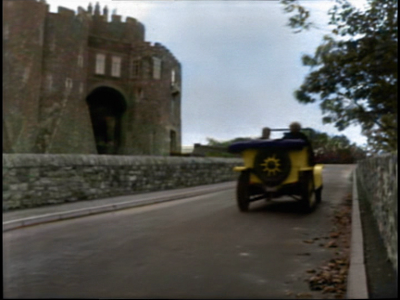

Generally, this season has a slightly lighter tone than the previous one, but The Mind of Evil breaks that mould and returns to the grim feel of the year before. This starts to become apparent quite quickly, with events unfolding inside the fictional Stangmoor Prison. The location filming is very effective, and Dover Castle in Kent is a suitably ominous location for the mood of the story. Good use is made of the location by director Timothy Combe, and the footage is especially impressive considering the problems encountered by the production team during shooting. A remounted location filming session was needed, because producer Barry Letts felt that there were not enough close-up shots during one action sequence, and additionally there turned out to be some damage on the original film. However, this strenuous shoot and the need for additional filming results in the finished sequence working very well. The eeriness of the location contrasts at first with the cheeriness of the Doctor and Jo Grant (Katy Manning), but that soon ceases to be the case once they discover the sinister Keller Machine inside the prison.


It is this which forms the central concept around which the events of the story are built, and it’s a fantastic idea. The machine supposedly enables the extraction of negative (or ‘evil’) thoughts from the minds of prisoners, facilitating their rehabilitation into society. Of course, it’s not that simple, and things soon start to go very wrong indeed. The Earth-bound stories that dominate Pertwee’s era have an advantage over those which take place away from our planet, and that is that they inherently provide an additional level of identification for the viewer. That is especially true here, as the threat of the Keller Machine feels very real indeed.


The Mind of Evil cleverly incorporates two separate strands into the overall narrative, as UNIT have meanwhile been put in charge of security for the imminent World Peace Conference. Writer Don Houghton manages this very well, as these two seemingly disparate parts of the story quickly become apparent as having a rather stronger connection. This also means that the story maintains its momentum far better than some other Pertwee six-part stories. Although four of the five cliffhangers are basically the same ending repeated in a slightly different way, The Mind of Evil never really lags that much.


Pertwee’s Doctor is well-known for telling authority figures what to do, and there’s no shortage of that in this story. As early as the first episode, he’s demanding that the Keller Machine is destroyed at once. (It’s no spoiler to say that it isn’t.) But The Mind of Evil also shows us a much more vulnerable Third Doctor. We see him put through physical and mental torment here, which makes the machine’s menace all the more effective. In some remarkable scenes, the Doctor essentially ends up half-dead. At the same time, though, Pertwee’s interaction with Manning is also particularly delightful here. They spend some time locked in a cell together, and this is where the two actors really shine – seemingly worrying more about a game of chess than about the Master, for example.


This is the second story to feature the Master (Roger Delgado), though his first outing was only the previous serial. Every story in this season featured the Master; was he overused? Undoubtedly, but he’s so brilliant that it doesn’t really matter. From the moment the Master first appears in The Mind of Evil – in a fantastic scene which I won’t spoil here – Delgado is superb in the role. Quite some time has passed in-story since the events of the previous one, Terror of the Autons. So, the Doctor and UNIT have been worrying about what the Master might be up to for a long time, and it is when the Master’s presence becomes known to our protagonists that The Mind of Evil really soars up onto another level. The Master plans a takeover of the prison, and it is this which really puts the Doctor, Jo and UNIT in a very sticky situation. Yes, there is some of the classic ‘escape, capture, escape, capture’ routine going on, but this particular story gets away with it more because of how well the characters work together. It’s like an elaborate game of cat and mouse, and the Master is absolutely revelling in it.


As always, Nicholas Courtney is wonderful in his role as Brigadier Lethbridge-Stewart. The Doctor, Jo, the Brigadier and UNIT really are the definitive Doctor Who team of the 1970s, if not the entire history of the series. The circumstances surrounding the World Peace Conference give the Brigadier something to do before he becomes directly involved in the main storyline, and a highlight is a scene between the Doctor, the Brigadier and the Chinese delegate. The Mind of Evil is notable for being one of only two classic Doctor Who stories to date to feature on-screen subtitles – in this case, they translate the Hokkien dialogue between the Doctor and the delegate.


A large amount of the tense, moody atmosphere in The Mind of Evil is created by Dudley Simpson’s music. Season 8’s music generally stands out as being very electronic, before it calmed back down into more traditional orchestral styles in subsequent seasons. But The Mind of Evil has some music which is genuinely terrifying. The theme which he creates for the Keller Machine is great, and arguably one of Simpson’s most memorable contributions to Pertwee’s era of the programme. It’s also nice that a piece of music serving as a theme for UNIT crops up again. Perhaps it doesn’t come out of the electronic music style so well; it definitely sounds enormously better in The Ambassadors of Death, but it still brought a smile to my face to hear it.


The fact that The Mind of Evil is such a dark, gritty story is probably what makes it so amazing. The drama of the story comes from the fact that it takes place in an environment where no-one is safe. With the Master and the criminals of Stangmoor Prison calling the shots, the Doctor and UNIT face both a monumental battle against the Keller Machine, and the task of stopping the Master before he can plunge the Earth into global warfare. It is the intricacy of the whole thing which really makes it work, with a number of different strands coming together into one coherent tale. This was Houghton’s final Doctor Who script, but he bowed out with a classic.

SPECIAL FEATURES


Chris Chapman’s making-of documentary on this release is called The Military Mind. It’s always great when the DVD extras escape the confines of the studio to shoot on location, and that’s exactly what happened here. The Military Mind was recorded at Dover Castle, and it’s undoubtedly one of the finest, most touching making-of items we’ve yet seen. Pik-Sen Lim (Captain Chin Lee) and Fernanda Marlowe (Corporal Bell) appear together, which in itself is nice to see – it’s relatively rare to see more than one person interviewed side-by-side, and it enables them to interact with each other and recall additional memories. When The Mind of Evil was made, Lim was keeping a major secret from most people on the production: she was pregnant. This caused some complications with her costume, which she explains here. There are points at which this documentary is very poignant, and a good example of this is Combe’s emotional story towards the end of how The Mind of Evil became his last contribution to Doctor Who. All these years later, Combe still finds it difficult to talk about, which really shows the affection he had for the cast and crew on the series.


It seems that the feeling was mutual, because a number of the interviewees here express regret about what happened.  But by far the most bittersweet element of The Military Mind is the presence of Courtney and Letts, who have both passed away since the documentary was recorded back in 2009. It’s especially sad to see Letts looking a bit frail, but at the same time it’s a wonderful gift to see him together with script editor Terrance Dicks for one last time. Letts and Courtney are both very sorely missed. For such a bittersweet documentary, it’s fitting that we are treated to a warm voice-over by Cameron McEwan, and although the cartoony end credits are a little odd (apparently this is a hangover from a deleted animated opening sequence, presumably canned in favour of the more poignant mood this piece has retrospectively adopted), this doesn’t spoil a delightful, sad and emotional feature.

The commentary was also recorded some years ago, and thus shares some of the poignant qualities of The Military Mind due to the presence of Letts. Speaking about the grittiness of this story compared to those around it, Letts says that Doctor Who wasn’t a children’s show, and so he felt there was enough leeway to allow the tone of the series to get darker. Dicks is always great on DVD commentaries, and this one is no exception. He is very entertaining and yet informative at the same time, talking about the story’s similarities to A Clockwork Orange at around the same time as he is poking fun at ‘Puff the Magic Dragon’, for example. This commentary operates a ‘revolving door’ policy, mixing up the contributors as it goes along. Manning joins Lim and Marlowe, and there are some lovely exchanges between the actors. Manning in particular is a delight to listen to, with so many great memories of the production and her fellow cast members. Combe and stunt arranger Derek Ware complete the line-up, and it is particularly interesting to hear how a frantic production led to crew members having to pitch in to appear on-camera during an action sequence – Equity’s worst nightmare! As usual, the goldmine of Doctor Who knowledge that is Toby Hadoke serves as a moderator, overseeing proceedings and keeping things flowing superbly. Because of the episode-to-episode variation in the contributors, this commentary maintains its momentum fairly well, and is a great listen. The Production Information Subtitles are written by Stephen James Walker and Martin Wiggins. These are always fascinating to read, as various production and contextual information pops up while the story plays. Here, we find out how the idea of the Keller Machine grew out of capital punishment, and an apparent explanation of why one character appears to be afraid of pink dragons…


This DVD features a new instalment in the long-running Now & Then series, examining where exactly The Mind of Evil’s location work was shot and how these areas look today. Richard Bignell has once again done a wonderful job, impressively matching the framing of the original film sequences to facilitate dissolves from the original footage to the locations’ current appearance. This works particularly well with Dover Castle, because it’s such a well-known location. To top it all off, the original production map is included, which really does put into context exactly where everything is – and how certain things we see in the story wouldn’t actually be geographically possible!


Behind the Scenes: Television Centre is a contemporary 1971 documentary presented by Norman Tozer. He spends twenty-four hours examining the day-to-day goings-on inside BBC Television Centre. The building has had quite a large amount of exposure over recent Doctor Who DVDs, which is nice considering it is currently out of action during renovation work, and will eventually return in a revamped form. What’s apparent looking at this documentary is that back then, Television Centre was absolutely buzzing with activity. From scenery building to special effects, film editing to the armoury, Tozer explores a wide array of activities inside the Centre. It’s a shame that in subsequent decades, the BBC has contracted a huge amount of the operations we see here to external companies. But back when this was filmed, it seems as though pretty much everything was done in-house, which makes the whole thing really endearing and nostalgic. With glimpses of shows such as Blue Peter and Z Cars (Doctor Who makes only a brief contribution, making it all the more commendable that this item has been included here), Behind the Scenes: Television Centre is immeasurably enjoyable, and a superb window to the past.


This DVD’s Photo Gallery was made by Derek Handley, and at nearly five minutes, there’s a wide selection of images included. It’s particularly interesting to see colour photography, due to the archival nature of the episodes themselves – but more on that below! In addition to the usual Radio Times billings, another PDF item is included. From April to September 1971, Kellogg’s ran a promotion whereby their Sugar Smacks breakfast cereal came with one of six Doctor Who-themed badges. This PDF contains images of the badges, packets and some promotional pieces. Aside from a couple of rather scary images of Jon Pertwee which look nothing like Jon Pertwee, this is a fun and interesting inclusion.

There is an Easter Egg somewhere on this DVD – a nice audio item from just before the story’s original transmission…


The Coming Soon trailer is a little bit different to usual, because it’s not for a DVD. Instead, it promotes the forthcoming Blu-ray release of Pertwee’s first Doctor Who story, Spearhead from Space. As the one and only story from the series’ original 1963-89 television run to be shot entirely on film, it has been possible to create a restored high definition transfer of the story. The inherent problem with advertising a Blu-ray on a DVD release is that the true quality of the former can’t be demonstrated. So, Gareth Randall has compensated for this by including a number of on-screen intertitles which really sell the point that this is the one and only high definition classic Doctor Who story. Some clips from the exclusive Pertwee biography that will be included on the release are also featured. Aside from a problem with the black levels (evidenced by the greyness of the pillarbox at the left and right sides of the image during the 4:3 clips), this truly is an appetite-whetting trailer.

AUDIO/VIDEO

The audio has come from the film recordings (see below), but the source materials aren’t brilliant. Across the story, the sound leans more towards a bass-heavy feel than would be ideal, but following Mark Ayres’ audio restoration The Mind of Evil sounds better than it has done for a long time – the dialogue is very understandable, although the music does sometimes feel a little indistinct and murky. While the audio here isn’t as clear as we’re used to from many other stories, it’s still very listenable and the best that could be done considering the source.

Without doubt the most noteworthy thing about this DVD is that it is the first time that The Mind of Evil has been seen in full colour in over four decades. Originally broadcast from 625-line colour videotape, all six episodes only survive today as 16mm black-and-white telerecordings. Until recently, this has been the most problematic of all the Pertwee stories from a restoration perspective, as it was the only one to have no colour episodes whatsoever surviving in any form, save for a short clip that exists as an off-air domestic Betamax recording. But now, thanks to some truly arduous work, it’s back in full colour once more. Episodes Two-Six have been restored using the Colour Recovery process, which analyses colour subcarrier information embedded in the black-and-white film recordings to work out what the original colour would have been. But the ‘chromadots’ necessary for the process to work were filtered out when the telerecording of Episode One was made – something which really should have been done for every telerecording that was produced, but thankfully this didn’t happen because there were far more film recorders than filters.

Therefore, Episode One has been manually colourised for this DVD. This task has been carried out by Stuart Humphryes (interviewed here) and Peter Crocker. Essentially, Humphryes hand-colourised certain key-frames from each shot of the episode, and later in the process, Crocker began using the colour from some of Humphryes’ key-frames to create his own ‘secondary’ key-frames to enable the project to be completed on time. Once all the key-frames were ready, the colour from them could be used to restore colour to the frames in-between using a mixture of motion-estimated interpolation and manual tweaking and warping. The result is stunning. This has got to be the most labour-intensive restoration project ever undertaken for the Doctor Who DVD range, but it really has paid off. Colours are realistic and natural, with skin tones looking particularly impressive. There are subtleties here which are rarely seen in a lot of manual colourisation efforts, and it is this which really sells it. Of course, it doesn’t look quite as good as the original 625-line tape would have done, but it often doesn’t look too far off. Humphryes and Crocker should be congratulated for their effort here.

The results of the Colour Recovery on the rest of the story are variable. Richard Russell was responsible for the original processing and initial fine-tuning of Episodes Two-Six of The Mind of Evil. High definition scans of the telerecordings were made (of course, because the film recordings were sourced from standard definition videotape, there’s no genuine HD to be obtained from them, but scanning at this level of resolution allowed the greatest possible level of detail to be captured) and then the Colour Recovery process examined the chromadots embedded within them to theoretically determine what the original hue and saturation would have been. In reality, the results of Colour Recovery always need a lot of manual tweaking, because various factors such as the quality of the telerecording mean that the raw output of the process is usually unstable and not wholly accurate. Russell carried out some specialised clean-up on the pictures before passing them onto Crocker for the remainder of their restoration. Episode Two is by far the poorest, as it seems to occasionally flicker into something close to monochrome for a few frames at a time throughout much of its duration. Episode Three sees a marked improvement (and no more of this type of flickering), but it is probably Episode Four which is the highlight of the Colour Recovery episodes on this release (and perhaps even of the process’ use on Doctor Who in general). Colours are very solid, and while there are still tell-tale signs such as some colour bleeding and spots of red where there shouldn’t be, the stability and consistency here is amazing. Episodes Five and Six are also good, though not as strong as Episode Four. Across Episodes Two-Six, hallmarks of Colour Recovery such as some speckles on areas of solid colour (blue skies especially) are present, but the restoration is nevertheless nothing short of breath-taking. The grade by Jonathan Wood has brought as much consistency and naturalness as possible to the end results, and along with VidFIRE processing to restore the interlaced 'video look', this is the icing on the cake of the most challenging (and, not too long ago, impossible) of restorations.

SUMMARY

The Mind of Evil is my favourite story of Season 8. It’s great to see what could be considered to be a last hurrah for the grittier style of the previous year, and everyone involved is at the top of their game. The story is moody, dark and grim, and it works on every level. Houghton’s final Doctor Who script is stunning, and it works very well both in isolation and as a single piece in the jigsaw that is the Doctor and UNIT’s on-going relationship with the Master. This DVD release includes a poignant commentary and making-of documentary, but the very best thing about it has to be the serial’s restoration to its original colour glory at long last. There’s only one score I could possibly give this release, due to the brilliance of the story and the sheer amount of love, care and effort that went into its restoration.

10 OUT OF 10


Buy Doctor Who: The Mind of Evil from BBC Shop

Purchasing this title through either of the links above helps to support this website.

Thanks to BBC Worldwide

Friday, 31 May 2013

Apartment 1303 – Blu-ray 3D Review

A chilling psychological story based on the J-horror film of the same name, Apartment 1303 is heading to Blu-ray 3D...


APARTMENT 1303
BLU-RAY 3D
BBFC: 15
Released by: Koch Media
Release date: 3 June 2013


"Apartments don't kill people. People kill people."


If you like films with an abundance of mystery, then you’re in the right place. Directed by Michael Taverna and premiered in 2012, Apartment 1303 is a chilling horror story with more questions than you can shake a stick at. One of the first things to hit me was the fact that this is by no means a story which rushes; it’s a very slow-burning chain of events that gradually unfolds, with twists at every turn. Available on Blu-ray (with both 2D and 3D versions included), DVD and VOD, Apartment 1303 is a film which although far from perfect, has plenty to enjoy.

The world depicted here is very dark. Apartment 1303 places the viewer in a world that’s very grim, with nothing seeming particularly cheerful or positive. The epitome of this is the Slate household, dominated by Maddie (Rebecca De Mornay), a singer desperately searching for fame but somebody who her daughters Lara (Mischa Barton) and Janet (Julianne Michelle) can’t wait to escape from. This is a major catalyst for Janet signing a lease on the first apartment she can find, the eponymous Apartment 1303 in Detroit.

This is a horror story which thrives on the suspense, the unknown, the mystery. There’s no extreme gore here – the horror is psychological, making us question the evidence of our own senses. Janet soon realises that there is something very strange about her new apartment, and I was surprised at how clearly these inexplicable events are shown on-screen. I was expecting them to be largely off-camera, inferred moments, but we actually see a huge amount of the events which drive the narrative forward. Therefore, the questions arise not so much from what has happened, but how and why it has happened. The visual style which Taverna has crafted for Apartment 1303 works stunningly in the context of the story, and adds a huge amount to the film’s psychological edge.


The screenplay is written by the director, adapted from a story by Kei Ă”ishi. The story itself is well-constructed, building layer upon layer of intrigue; Apartment 1303 is a labyrinth of mystery, twists and impossible occurrences. Corey Sevier plays Janet’s boyfriend Mark Taylor, and he becomes directly involved in the plot a little later on in the film. Janet’s neighbours are immensely odd people – Gordon Masten plays the creepy building superintendent, who is not a pleasant man, something which soon becomes clear in one exchange with her. Perhaps the greatest enigma of the film, though, is a little girl called Emily (Madison McAleer), who seems to somehow be integral to the supernatural events in Apartment 1303.

The film does have its flaws, however. As opposed to gradually developing the characters, Apartment 1303 essentially dumps most of what we need to know about the three main characters on us within the first few minutes, and then leaves the plot to simply roll along for the rest of its duration. The mystery of the storyline itself was enough to hold my interest, although the screenplay would have worked better if Taverna had been more thoughtful about how to make the best use of the characters. The best performance in the film has to be De Mornay. As Maddie, she is superb at portraying a woman who has aspirations of fame but instead is locked into a downward spiral of alcoholism.

As for Barton and Michelle, their acting here isn’t as strong. Both of them show a lack of conviction in their dialogue (which does feel like it could have done with another draft or two) at various points throughout, although it is Michelle who is the worst offender here, as she is never particularly believable. There are times when Barton isn’t much better, but she at least has moments of improvement. But perhaps the greatest frustration of Apartment 1303 is also the reason why you should go into it with your “suspension of disbelief” mode well and truly switched on. If the apartment is freaking Janet (and also Lara, arguably) out so much, forget the one-year lease, just get the hell out of there!


This film has been assigned a 15 certificate by the BBFC, although I’d say that it tests the boundaries a bit. Breaking it down into its individual components, there’s nothing which warrants bumping the certificate up to 18, but the film can’t be too far off the 18 mark. There’s strong language (the F-word is heard on multiple occasions) and while there’s no excessive gore, there’s still some rather frightening imagery. There’s also a steamy scene between Janet and Mark, which although not explicit (for example, there is no nudity, with underwear staying on), isn’t exactly implied. As I say, these aren’t particularly objectionable for the 15 certificate individually, but looking at the overall film which they form a part of, it’s a tough one to call. I’d be interested to hear what others think about this subject.

Thankfully, Apartment 1303 was actually shot in 3D, as opposed to being one of those half-hearted post-conversion cash-ins which often seem to dominate cinema. This really does show in the film – while there isn’t much here which could be described as breath-taking, the 3D does add to the experience. The opening credits make very nice use of the additional dimension. When I started the film and pressed pause so that I could switch on my 3D glasses, I was very impressed when I put the glasses on. The sequence consists of a sweep around a ghostly image (similar to that on the cover of this release) with the captions overlaid, and what’s interesting is that the two overlap each other a bit. Sometimes the background ends up on top of the caption, and my brain initially told me something along the lines of “ouch, that’s messy” – but actually, after seeing it in motion for a few seconds, it works quite well. It sells the notion that the forces in Apartment 1303 are intangible and transgressive of physical actuality (whether this was actually intentional is anybody’s guess, but it’s what popped into my mind before the actual film had even got underway, so I’ll give them the benefit of the doubt on this one).

As for the use of 3D during the film proper, it’s most impressive during the scenes set in the apartment itself. It helps to form an idea of the physical space, and emphasises the suspense of not knowing what lurks just around the corner. In some shots, it also helps us to get a better idea of the height of the apartment building. During the more stylised moments (which I don’t really want to describe here due to spoilers, but you’ll know them when you see them), although the 3D looks good, it perhaps doesn’t reach its full potential – but these moments are always quite brief, so in the time it took me to realise that the 3D could have been taken a bit further, the moment had passed anyway. Away from the apartment building, a lot of the shots in various places around Detroit aren’t generally too remarkable, although there are some nice shots in and around the Slate residence.


Overall, Apartment 1303 is flawed, but still enjoyable. I expect this is one of those films which doesn’t have a huge amount of replay value, but on first viewing it’s compulsive simply because we don’t know what is going to happen, even if some of the acting is a bit dodgy and the character development isn’t what it could have been. Without giving anything away, the ending is open – the film does not close its own narrative, but it gives us enough evidence to formulate our own ideas about what exactly is going on. If you’re expecting everything to be completely tied up, the ending will underwhelm and perhaps even frustrate you, but if you’re aware that it’s more of an open ending, then it might just delight you.

AUDIO/VIDEO

There are two audio tracks to choose from: 2.0 stereo LPCM or 5.1 DTS-HD Master Audio (both are lossless). I would normally have chosen the 2.0 track because it better suits my equipment, but in this case I chose 5.1 for various reasons not relating directly to this product, and it does sound impressive. With a handful of scenes being the exception, dialogue is usually easy to hear, and John Lissauer’s music has a nice amount of power behind it. The music is noticeably louder than the dialogue at various points throughout (though thankfully the two don’t coincide very much, saving the dialogue from being drowned out too much), but this is arguably a necessity because of the effect the music is trying to create. This is a horror film after all…

Here, I am solely reviewing the 3D version of the film, which is included on this Blu-ray at 1080/24p, in an alternate frame 3D presentation encoded with MVC. A common problem with 3D is that the glasses can darken the image, though quite how tolerable this is depends both on the viewer and how bright the image is in the first place. Because of how many dark shots there are in Apartment 1303, I did find the darkness of the 3D image more of an issue than I often do, although I sorted this out by increasing the backlight level of my LED LCD TV – normally I have the backlight no higher than 12 out of 20, but in this case I ramped it up to 15. While I don’t normally feel the need to do this, it did sort the problem out as far as I was concerned. In pretty much all other respects this is a fairly strong Blu-ray transfer, with deep blacks, strong colours and a great amount of clarity in the image (providing the picture is bright enough to discern the detail). There aren’t very many instances of rapid camera pans or tilts causing motion problems with the 3D, which is an issue that can sometimes be found elsewhere. Overall, apart from the initial problems I had with picture brightness through the 3D glasses, I can’t think of many bad things to say about this high definition presentation.

This is a region-free release. All video on the disc is entirely 24p-based – there is no 50i content to cause problems for buyers in 60i territories.

Important: The images in this review are NOT sourced from the Blu-ray.

6 OUT OF 10

Purchasing this title through either of the links above helps to support this website.

Thanks to Organic

Wednesday, 29 May 2013

Daleks' Invasion Earth 2150 A.D. – Blu-ray Review

The second of the two 1960s films starring Peter Cushing arrives on Blu-ray...


DALEKS' INVASION EARTH 2150 A.D.
BLU-RAY
RRP: £19.99
BBFC: U
Released by: StudioCanal
Release date: 27 May 2013


Click on the screenshot thumbnails below to access full HD images.

"They've bombarded us with meteorites, subjected us to cosmic rays, smashed our cities, destroyed whole continents of people – and some of us they've turned into living dead"


Doctor Who’s second (and, to date, final) outing on the big screen came in 1966, with the release of Daleks’ Invasion Earth 2150 A.D. Again starring Peter Cushing as Dr Who, this sequel to the previous year’s Dr Who and the Daleks is even more ambitious than its predecessor. The Daleks are back with a deadly plot, and this time around, the action is coming to Earth…


Unlike the first film, Invasion Earth makes use of a pre-titles sequence (in the correct place – at least one prior DVD release has moved the scene to after the opening credits), depicting London Special Constable Tom Campbell (Bernard Cribbins) trying and failing to stop a burglary at a jewellery shop. Right from the off, this scene demonstrates a key fact about Invasion Earth: it is considerably more action-oriented than the first film. There are explosions, fights and stunts, and while they were present in the preceding film, there is a greater quantity of them here, meaning that Invasion Earth doesn’t feel as ‘talky’ as the film that came before it. Indeed, one stunt proved to be dramatic on- and off-screen, as stuntman Eddie Powell broke his ankle while performing a fall.


Just as Dr Who and the Daleks was based on the BBC serial The Daleks, this film is based on the Daleks’ second appearance on the small screen, 1964’s The Dalek Invasion of Earth. In my review of the first film, I discussed the differences between the universes of the film and television versions in general, and Invasion Earth also differs in some ways from the specific serial it is based upon. Whereas the original story features the Doctor, Susan, Ian and Barbara, the film replaces the latter two with Tom and Dr Who’s niece Louise (Jill Curzon), who appear alongside Dr Who and his granddaughter Susan (Roberta Tovey). Additionally, the monstrous Slyther from the TV story is absent from the film (many would say that this is a good thing), though the fundamental story remains very similar, albeit with a different take on the conclusion. The time travellers lose access to TARDIS in exactly the same way as they do on TV, a classic plot device of Terry Nation – who wrote the original story – and the iconic cliffhanger moment of a Dalek emerging from beneath the water of the Thames is also repeated for the film. Although, the question remains of what exactly it was doing down there!


This is altogether a more impressive spectacle than the first film, with TARDIS bringing the travellers to London in the year 2150, but it’s a very different city to the one we recognise. Much of it lies in ruins, and there is a great deal of mystery about what has happened and why London is so deserted. Whereas the first film was largely limited to a few locations, Invasion Earth takes place on a massively larger stage, as the time travellers and a group of resistance fighters have to make the perilous journey from London to Bedfordshire, where the Daleks’ mysterious plan is unfolding. All of the principal cast get something to do (certainly more so than in the first film) and it’s great to see a lot of location work here, something which was almost entirely absent from the previous film. The cinematography is excellent, with amazing use being made of the widescreen Techniscope format by director Gordon Flemyng and cinematographer John Wilcox. Dr Who and Tom’s search through a warehouse is very atmospheric, with Flemyng and Wilcox making the most of the set. Another notable scene is one in which we explore the Daleks’ control centre – you can really get a sense of depth, as the shaky camera moves around the large space. At one point it focuses on a Dalek on the other side of the room and follows its movement; while this sequence stands out as being quite unusual in the wider context of the film’s cinematography, it is a very creative idea and one of the film’s most memorable moments.


The music in Invasion Earth is composed by Bill McGuffie, with electronic elements provided by Barry Gray. It really evokes the period in which the film was made, and also sounds a bit similar in places to the score of the original TV story, with its percussion sounds underlining certain scenes within London. The main theme music is a different composition to that in Dr Who and the Daleks, and it has a drastically faster pace. This is appropriate given how much more exciting and set-piece oriented this film is. Although primarily orchestral, the electronic elements are a nice touch. Overall, the music represents what this film is: science fiction, sixties style.


Cushing’s portrayal of Dr Who (a human alternative to the TV series’ Time Lord) is much along the same lines as in the previous film, with all of the same values and characteristics present here. An eccentric, kind and extremely clever inventor, he has all of the principles of the small screen Doctor, even though he is essentially a different character. There’s something about Cushing which just seems right for the role, as he works on every level in the part. It’s amusing how readily Dr Who allows Tom, a complete stranger, on-board TARDIS (although he did enter by accident) – they swiftly become friends, and Cribbins is absolutely wonderful throughout the film as Tom’s disbelief soon turns to wonder and then curiosity. In my review of Dr Who and the Daleks, I said that Cushing is the person who made that film so special. In this case, I’d suggest that it is Cribbins, as he is just a joy to watch. One very memorable scene features him having to pretend to be one of the Daleks’ robotised slaves, and Cribbins really goes for it.


Tovey returns to her role as Susan, and she is as fantastic here as she was in the first film. Again, the relationship between Susan and her grandfather is lovely, and it really shows through in the actors’ performances. In fact, Cushing apparently said that he would only return for a second film if Tovey came back as well, which is a really touching story. Although, Susan is separated from Dr Who for a large amount of the running time, as she has to make her own journey with rebel leader Wyler (Andrew Keir). This builds on Dr Who and the Daleks, in which Susan bravely volunteers to make a dangerous journey on her own, and Tovey’s scenes with Keir in this film are a highlight. Curzon works well alongside Cribbins, and for a while the pair must face danger in their own part of the plot. Invasion Earth is arguably skewed more towards Dr Who, Tom and Susan, but as Louise, Curzon gets more to do than Jennie Linden did in the first film.

SPECIAL FEATURES


Restoring Daleks’ Invasion Earth 2150 A.D. (HD 1080/50i) is a short featurette about the film’s restoration for this Blu-ray. The beginning is very similar to the start of the equivalent feature on the Dr Who and the Daleks Blu-ray, with an explanation of the advantages and disadvantages of Techniscope. This time though, the topic is expanded slightly, with discussion of Flemyng’s skilled use of the format. This is followed by interviews with some of those responsible for the restoration at Deluxe, with a quick glimpse at how the clean-up and grading was dealt with. This is a highly interesting (albeit brief) item, and it’s great that the people who made the film look and sound as good as it does have had a chance to appear on-screen and talk about their work.


A new interview with Bernard Cribbins (HD 1080/50i) appears. At just over four minutes long, it’s a shame that this item isn’t a bit longer, but it’s still great to hear Cribbins’ memories of the production. He explains that he had worked with Cushing before, and shares some memories of the late actor (whose centenary is this year). My favourite of the stories he recalls involves the cast ending up giggling uncontrollably, resulting in a stern telling off from Flemyng. Cribbins also talks about his audition for the part of the Fourth Doctor on TV (which eventually went to Tom Baker) – this is a nice reminder that while the films inhabit a different universe to the one we are used to, it’s all ultimately part of the same thing. The sound on this interview is somewhat on the quiet side (which is also the case with Gareth Owen’s interviews on both this release and that of the previous film), but that doesn’t spoil a lovely little interview with a legend of the industry.


The new interview with Gareth Owen (HD 1080/50i) is around the same length as the Cribbins feature, and it is a bit stronger than the corresponding item on the Dr Who and the Daleks Blu-ray. The author of the book The Shepperton Story explains that this film was created in an attempt to capitalise upon the success of the previous one, although it ran into some problems during production; Owen expresses his belief that Cushing was “slightly underused” in the finished film due to the actor being written out of some scenes because he was unwell. The feature concludes with Owen discussing some of the reasons why a third film didn’t happen, and he reads a “favourable” tabloid review which really isn’t very favourable at all, demonstrating how vitriolic the critical reaction was at the time.


A new Stills Gallery (HD 1080/24p) shows some images relating to the film. This is by no means the most comprehensive gallery ever, but it does show some interesting shots (of the model Dalek saucer, for example), in addition to a variety of promotional publications. Finally, the original theatrical trailer (SD 576/50i) is included. It shares one of the oddities seen in the Dr Who and the Daleks trailer, namely referring to the Daleks as “men of steel”, but it is nevertheless fun to watch. The audio leaves something to be desired, as there are no less than four dropouts in the soundtrack, but this does at least allow for comparison with the HD restoration – something which is also true of the picture quality.

AUDIO/VIDEO

Invasion Earth’s mono audio is presented as a lossless LPCM 2.0 soundtrack. Generally, the audio is very satisfying considering the age of the source material, with clear dialogue and strong, immersive music. There is one scene in which I noticed that the audio becomes more muffled, quite noticeably so compared to the surrounding material. But luckily, things get back to normal pretty quickly. Compared to the unrestored audio which can be heard on the trailer (which is plagued with dropouts), the restored audio on the main feature really is a revelation.

The source for the video is a 35mm interpositive produced from the original Techniscope negatives. This is presented at 1080/24p in its correct aspect ratio of 2.35:1, encoded with MPEG-4 AVC. The technical advantages of shooting with Techniscope come at the expense of picture quality. Whereas an ordinary 35mm film frame occupies four perforations on the film, Techniscope pictures only use two. This means that when the film is blown up to any significant size (either a cinema screen, or as in this case, a 1080p HD transfer), it becomes quite grainy. Thankfully, this grainy aesthetic that is a part of the Techniscope process is preserved on this Blu-ray, without any overzealous attempts to ‘improve’ the picture. Because of the limitations of the Techniscope process, the picture quality of this Blu-ray isn’t comparable to a lot of 4-perf 35mm film transfers that are available on the format, but nevertheless, the benefits of HD are very apparent. Something which seems to be inherent in Techniscope footage is that scenes with high-key lighting look quite a lot better than those with low-key lighting, so daytime scenes in Invasion Earth are where the most impressive shots can be found. The darker scenes occasionally have a blue or green tint to them, and the black levels are variable. Sometimes blacks are very deep, while other times dark scenes have a murky grey feel to them. So, the darker shots are quite inconsistent (which is almost certainly because the Techniscope process itself isn’t as well-suited to that sort of material), but it is the daytime scenes which truly shine on this Blu-ray. I’d say that this release looks better in this regard than the Blu-ray of Dr Who and the Daleks – perhaps that’s because of the naturalness of the location filming, rather than the more artificial nature of the studio-bound scenes which prevailed in the first film. But whatever the reason, more brightly-lit material has a stunning vibrancy to it considering the source materials, and is more consistent in its clarity than Dr Who and the Daleks, which varies more on a shot-by-shot basis. The colour grading is accurate to the original intentions of the filmmakers (the interpositive used for this transfer already had colour grading applied to it), and it has a very naturalistic feel to it while still conveying the bold, Technicolor selling point of the film. The restoration has resulted in a very clean, stable presentation; of course, there is a blemish in the film every now and again, but this doesn’t detract from how lovely the film looks overall.

Below are comparisons between the 2006 Optimum DVD and the 2013 Blu-ray – above is the DVD release and below is the Blu-ray. For the best comparison, open each image in its own tab and flick between the two.


Please note that this Blu-ray is locked to Region B. Anyone who imports it to another region should ensure that their region-free equipment supports 50i content, as this is the format the menu and certain extras are presented in.

SUMMARY

After this one, no further big-screen films based on Doctor Who were made. The critical reception was dire, and unlike the first film (which still managed to be a roaring commercial success), the press reaction probably put a dent into the box office takings of Invasion Earth. Maybe the novelty had worn off – whereas Dr Who and the Daleks sold itself primarily through being in colour and widescreen, perhaps this was a trick that only worked once. It’s a huge shame that the films didn’t continue – if the first film was great then this one is amazing. The narrative is far grander, and we can only guess at what might have been forthcoming had the idea continued. It would have been interesting to see a film starring Cushing as Dr Who which didn’t have Daleks in, although the box office prospects might not have been spectacular. But now we’re entering the realm of infinite what-ifs. Looking at Invasion Earth as a whole, it is largely a thrilling viewing experience, head and shoulders above the first film with fine performances from the cast and amazing direction and cinematography. Where the extras are concerned, it would have been better if they were a little longer (especially the Cribbins interview), but they are still enjoyable and complement the film nicely. The restoration does the best it can with the source material, and while the darker scenes aren’t brilliant, the daytime ones are absolutely worth the price of the Blu-ray. All in all, Daleks’ Invasion Earth 2150 A.D. is a stunning conclusion to an alternative world of Doctor Who, and it’s never looked as good as this.

8 OUT OF 10


Purchasing this title through any of the links above helps to support this website.

Thanks to StudioCanal